
Gender inequality is not just a social issue in Papua New Guinea; it is a business issue. Gabriella Munoz explores what businesses and can and are doing to make a difference.

Gender inequality is not just a social issue in Papua New Guinea; it is a business issue. Gabriella Munoz explores what businesses and can and are doing to make a difference.
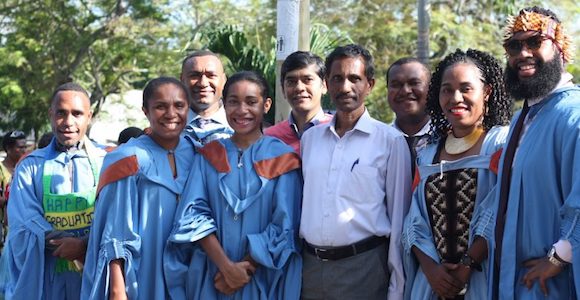
In a slow economy getting jobs in the formal sector can prove difficult. But Rohan Fox, a Researcher at the Australian National University’s Crawford Policy Centre, says his research suggests that graduates of the University of Papua New Guinea do find employment.

The education of Papua New Guinea graduates needs to improve, says Scott Roberts, General Manager of human resources firm Rubicor Technical. He tells Business Advantage PNG that it will help address the problems of unemployment and under-employment or graduates.
A new development on the Papua New Guinea University of Technology’s campus in Lae will give PNG’s second city its first shopping mall. Vice-Chancellor Dr Albert Schram tells Business Advantage PNG the plan includes housing, shops, banks and business offices.
A simulated gas processing plant has arrived in Port Moresby for use at the new Kumul Petroleum Academy, and is due to begin operating by September.
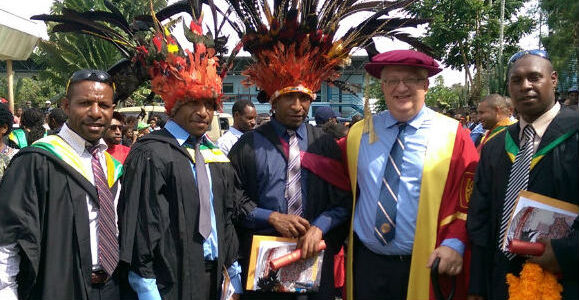
Albert Schram, Vice-Chancellor of the University of Technology (Unitech) in Lae, tells Business Advantage PNG that the institution is undergoing a broad ‘cultural change’. The aim is to create closer ties with business in order to produce better qualified graduates.
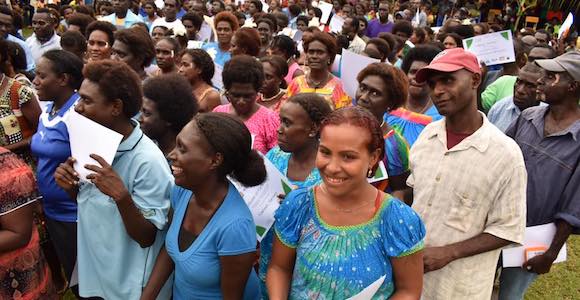
The Kokoda Track Foundation (KTF) is pressing ahead with an urgent training project to improve the skills of thousands of elementary school teachers across Papua New Guinea.

Infrastructure development and improving the agricultural sector are the two key focusses for World Bank financing in Papua New Guinea. But, on a personal level, it is education and its potential that inspires its PNG Country Manager, Steffi Stallmeister. She spoke to Business Advantage PNG.
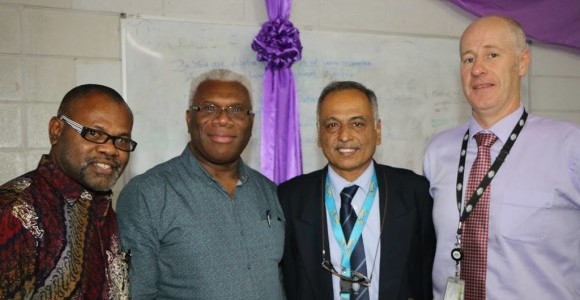
A shift in priorities continues at the University of Papua New Guinea (UPNG) with the recently named PNG School of Business and Public Policy established to improve the performance of the public service sector in the country as part of the Pacific Leadership and Governance Precinct.

An analysis of foreign workers coming to Papua New Guinea since 2000 indicates a chronic lack of skilled tradespeople, according to Lae-based business leaders. While skills training initiatives are under way, an expected surge in mining projects over the next few years highlights the urgency for more skilled workers.